

Reflex
Lets AI use a real browser without burning through context or taking dozens of slow steps
4.2xfewer tokens across three matched flows
The problem
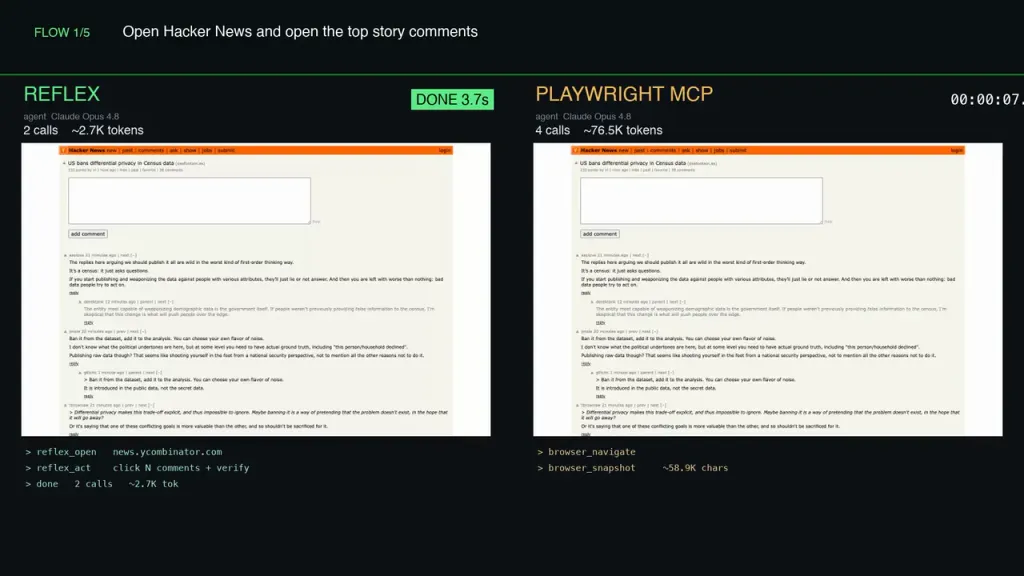
Give an AI a browser and it drowns. Existing automation tools were built for scripts, so they send back the entire page every time. One navigation can burn tens of thousands of tokens before the AI has done anything useful. Worse, each click or field is a separate trip, and every trip adds seconds.
The bottleneck is not the browser. It is the agent's context window and its turn count.
What I built
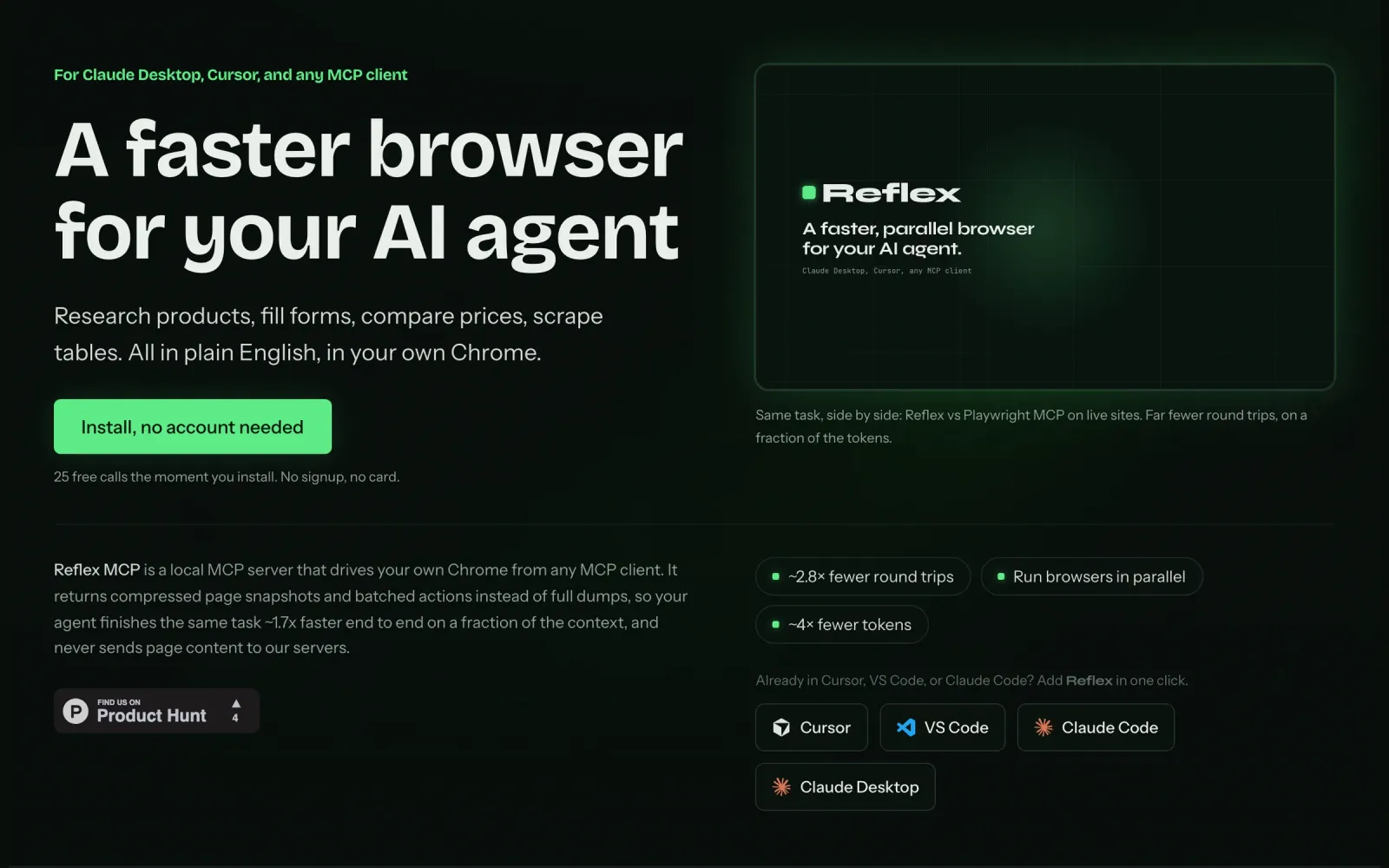
Reflex is a local tool that lets AI drive your own Chrome. It sends back only the buttons, links and fields the AI needs, reports what changed after each action, groups several steps together, and gives useful failure reports instead of blindly retrying.
Measured against Playwright MCP on the same tasks across live sites: 4.2x fewer tokens, 2.8x fewer round trips, and 1.7x faster overall.
The design bet
Reflex deliberately trades tool-side wall clock for fewer turns and smaller payloads. That is the right trade only when a model is in the loop, and the README says so plainly: if no agent is involved, plain Playwright is the better tool. Being honest about where the product does not apply turned out to matter more to developers than another round of benchmark claims.
How the interface works
- Distilled snapshots. The page is compressed to just the buttons, links and fields the AI needs, each labelled so it can act on the right one.
- Deltas, not dumps. After an action, the agent receives what changed. Re-reading an unchanged page costs nothing because it never happens.
- Batched, guarded steps. A whole flow (navigate, fill, assert, click, screenshot) goes out in one call with
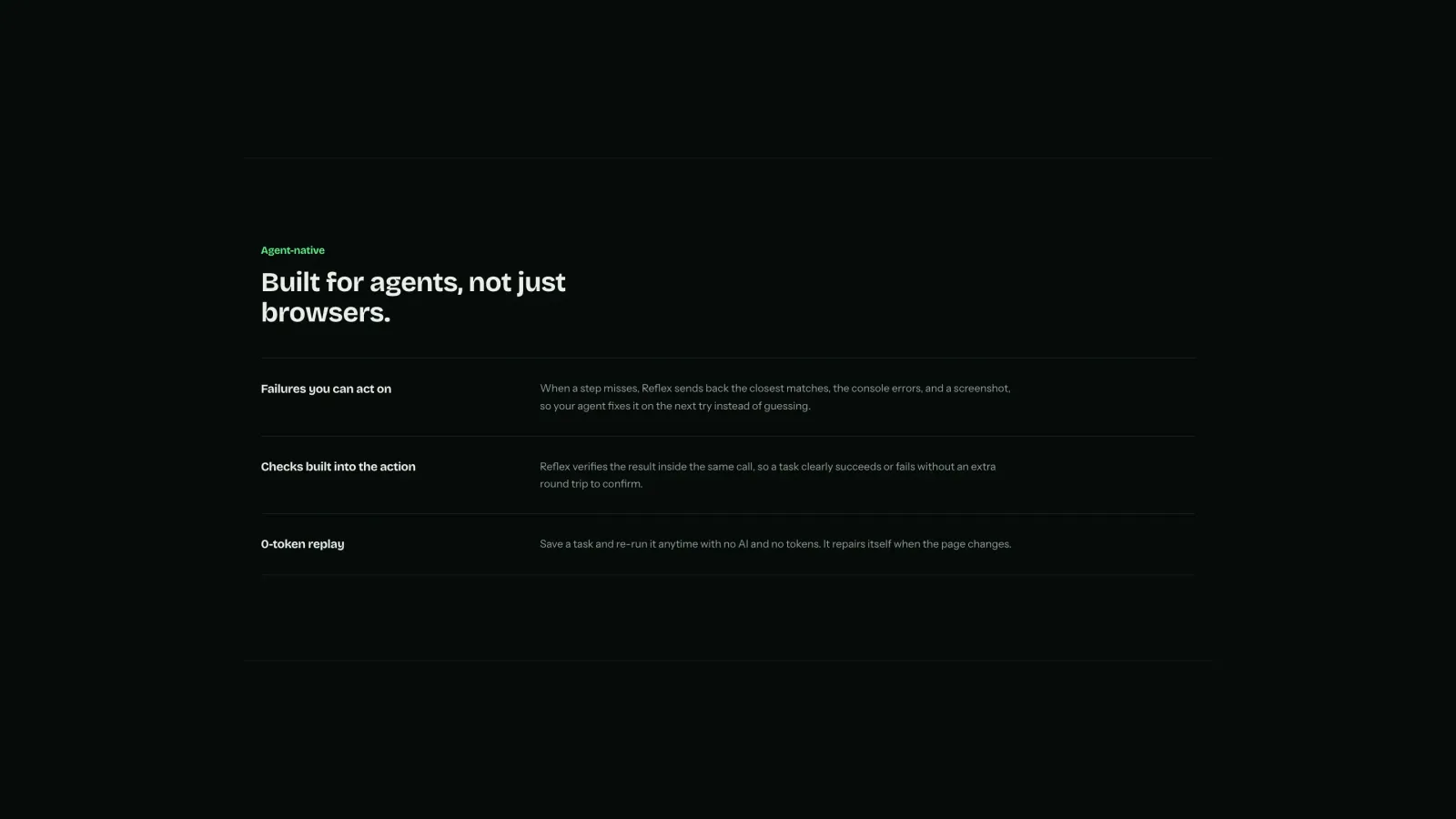
expectguards between actions, so the common path is a single round trip. - Forensic failures. When a step fails, the report names the near-miss candidates, the console and network errors, and what changed just before the failure. The agent fixes it and resends in the same turn instead of blindly retrying.
- Replayable flows. Once a path works it can be recorded and re-run with zero tokens and no model at all.
Keeping it small and private
Even the tool instructions have to stay small, because they sit in the AI's memory for the whole session before it does anything. The command-line tool and AI plugin ship together so their versions cannot drift apart. Everything runs on the user's machine: the tool, the browser and their logins. Page content never reaches a server I control, which is what makes it safe to use on signed-in sites.
Where it runs
Published to npm as reflex-browser and installable with a single command into Claude Code, Claude Desktop, Cursor, and VS Code. Metering and accounts run on Cloudflare Workers with a D1 ledger. macOS is fully supported and Windows is in beta.